
From Burning to Building
Abyss has burned more than 3.3% of the ABYSS supply. From here, roughly half of the buyback share goes into liquidity for the DEX and the lending market.
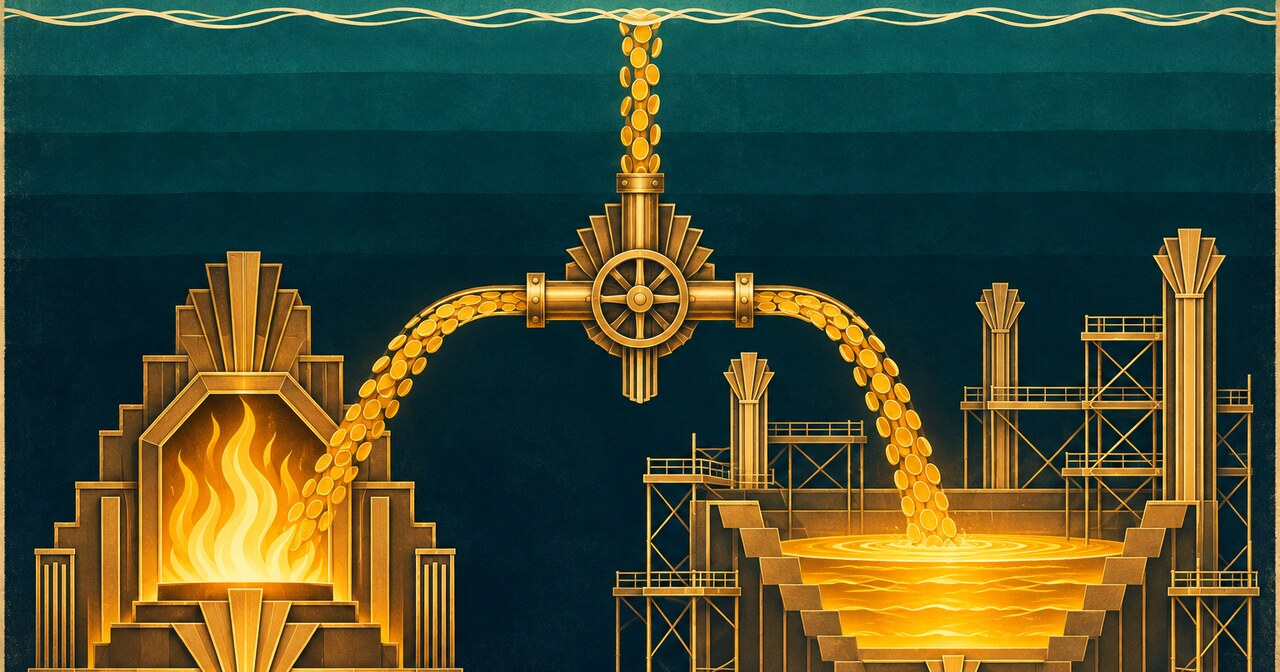
Since launch, about 80% of the fees Abyss collects have gone into buying ABYSS off the market and burning it. Of the original 100 billion tokens, about 96.65 billion are left. That's more than 3.3 billion ABYSS, a little over 3.3% of the supply, gone for good.
For a protocol in its infancy, that was the right use of revenue. The DEX and the launcher mostly needed people to find them and use them, and there wasn't much we could do with the money that would do more for holders than a buyback. Burning is also the easiest thing a protocol can do with money. There's nothing to manage, and the number only goes down in the good direction.
Abyss isn't in that stage anymore. It's passed $100,000 in protocol revenue, the lending market is coming, and the things we're building next need liquidity more than they need attention. So the tokenomics are changing to match.
What's changing
From here, that 80% gets split down the middle. Half keeps buying and burning ABYSS, the same way it has since launch. The other half goes back into the product as liquidity: deeper ABYSS markets on the DEX, and liquidity for the Abyss lending market as it opens.

Why liquidity
A lending market is only as useful as what's in it. Borrowers need something to borrow, suppliers need confidence they can get back out, and every listing on Abyss comes with caps that only open up as a market proves it can handle more. Waiting for outside deposits before any of that works would be slow, so revenue will put the first liquidity in.
The DEX needs the same thing. ABYSS is the token at the center of all of this, and the deeper its main pool is, the less bigger trades move the price. Depth is also one of the things any lending listing looks at, ABYSS included.
There's also a plain revenue argument. A burn happens once. Liquidity the protocol owns keeps earning trading fees, and liquidity supplied to the lending market earns interest. Reinvested revenue becomes more revenue, and part of that goes straight back into buybacks.
What stays flexible
Half and half is where we're starting, not a fixed rule. We'll change the weighting as the product's needs change, in either direction. The reinvestment side isn't limited to the two uses above either. Revenue may also go toward onboarding or growing new liquidity pools, seeding new lending markets, or bootstrapping products we haven't launched yet.
Burning isn't going anywhere. It's just no longer the only thing protocol revenue does. Up to now, most of what Abyss earned left the system to make ABYSS scarcer. From here, a big part of it stays in, making the markets ABYSS runs on deeper, which is what a product that's grown out of its first stage needs.
From the depths...
App: app.abyss.trading
Docs: docs.abyss.trading
Blog: blog.abyss.trading