
Abyss: Launch the Market You Actually Want
The DEX, the launcher, hooks, lending and what comes next.
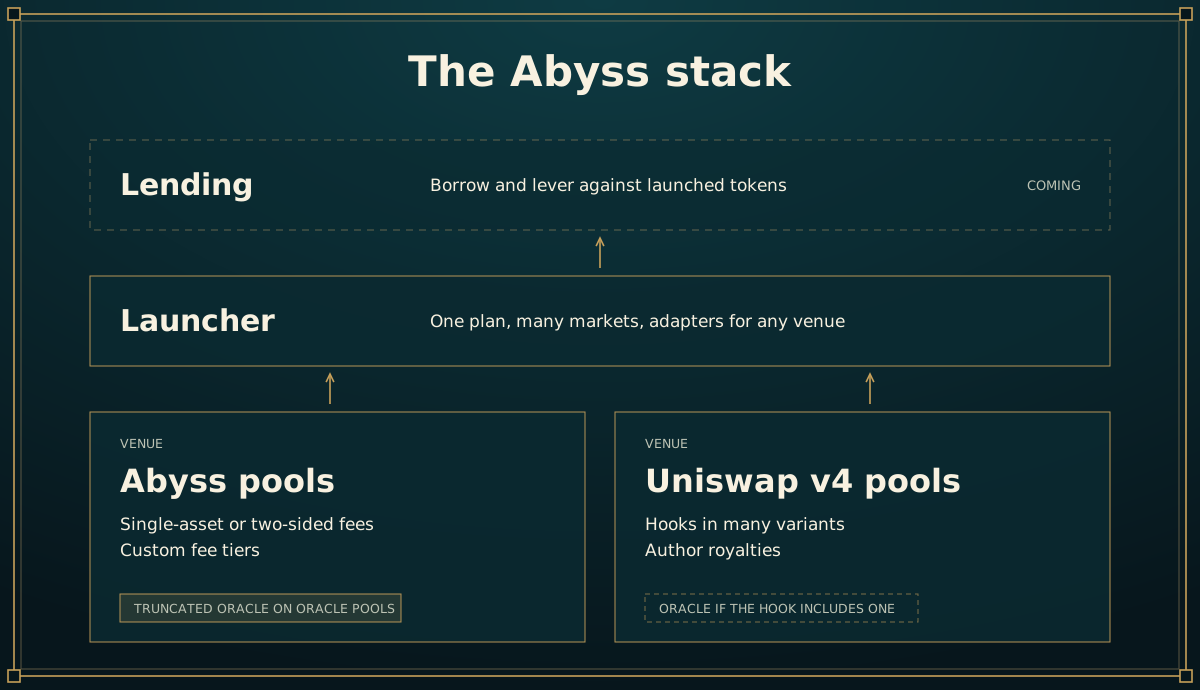
Abyss is a DEX, a token launcher and, soon, a lending market. We built it because projects should get to decide how their own markets work, and almost everything out there decides that for them.
It started with single-asset fees
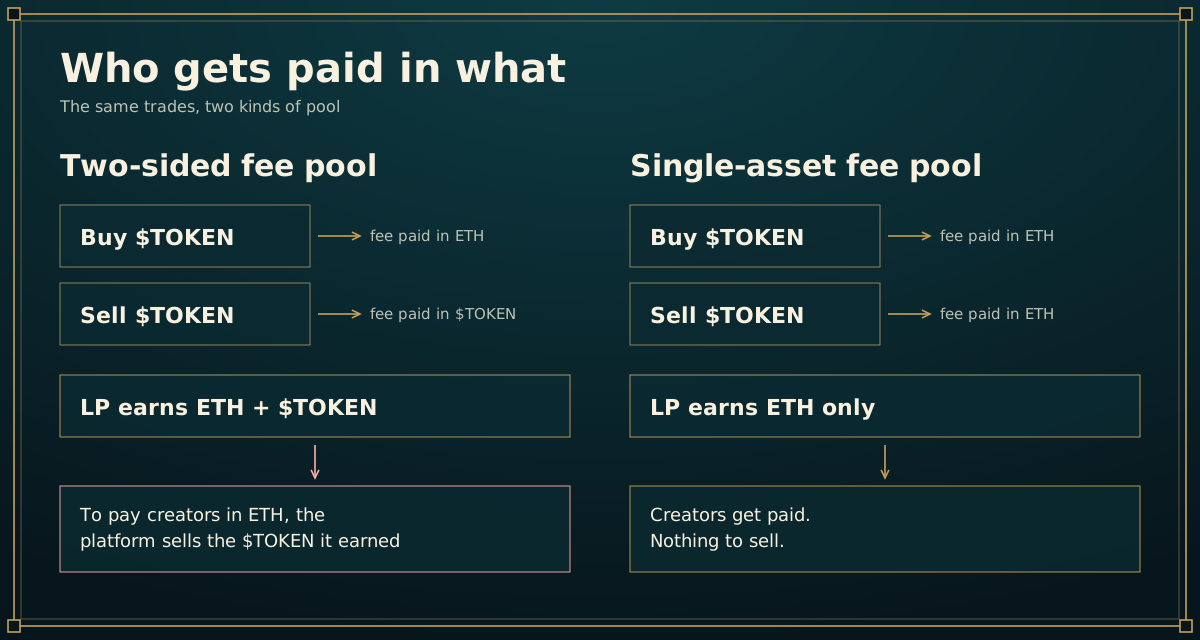
The first thing we wanted was a pool that pays fees in one token. On Uniswap that takes a custom hook: someone has to write it, deploy it and then add liquidity. On Abyss it's a few clicks.
We thought this was interesting for two reasons. The first is that a big LP like ETH/USDG no longer has to collect the stable side. You can get paid entirely in ETH, which on the way up probably helps, and on the way down, well, you're accumulating. Win win, right?
The second is launches. A lot of platforms pay their creators in one asset while their pools collect fees in both tokens, so they end up selling their own users' tokens to pay out. Sometimes that's a massive sell, and it hurts the chart. A pool that only collects the quote side never has anything to sell.
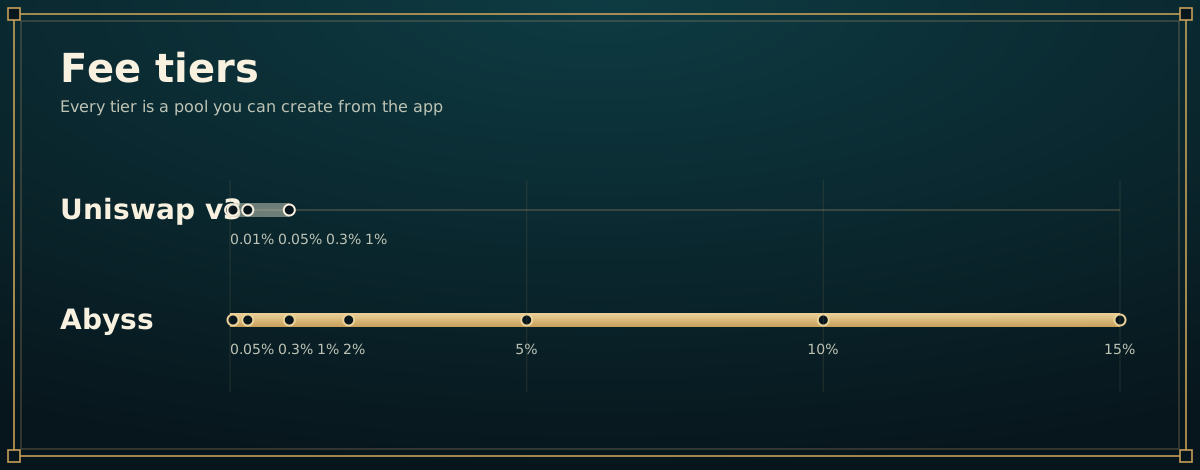
And once fees could be paid in one token, there was no reason to cap them at 1% like Uniswap v3 does. Abyss goes up to 15%. That's basically a tax token without a tax contract, and you won't find it on other launchers unless you deploy your own hook.
The truncated oracle
Abyss oracle pools, and our default Uniswap v4 launch hook, carry a truncated oracle, an idea Uniswap wrote about for v4 that makes a pool's price much harder to manipulate. That gives a token a trustworthy price record from its very first block.
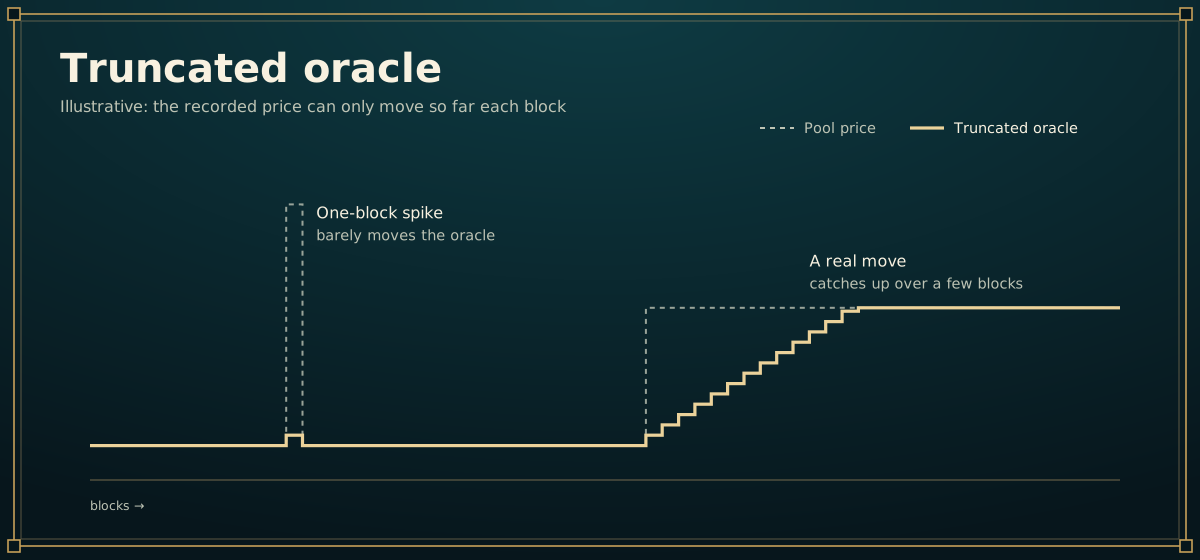
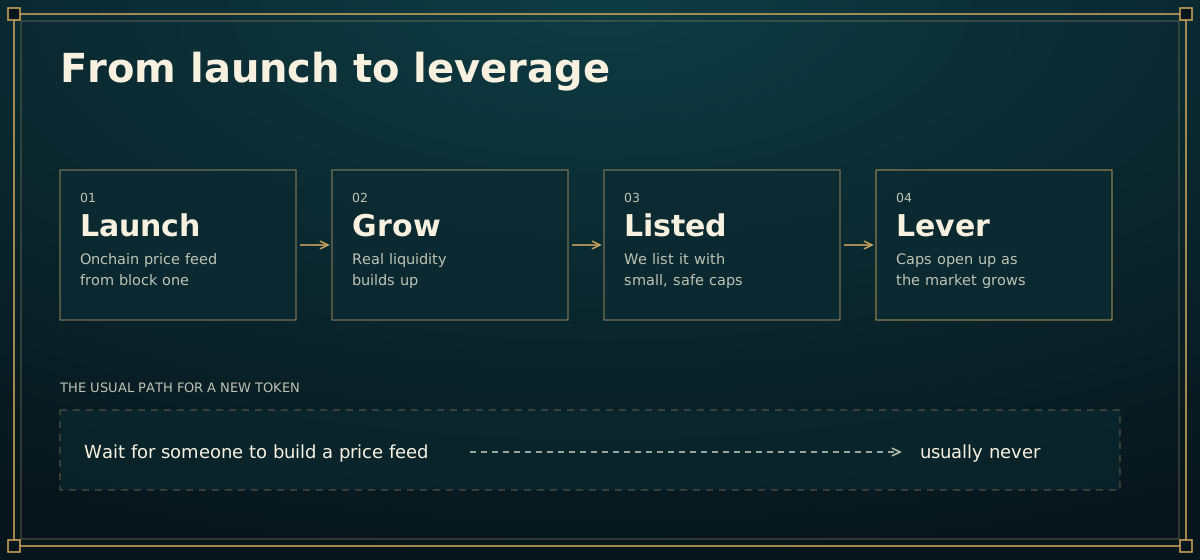
We care about this because so many coins never get access to lending, leverage or loans, simply because nobody ever builds them a price feed. A truncated oracle isn't perfect, but with proper risk management we think it can be the long-tail oracle that finally lets those tokens in. That means some really degenerate on-chain leverage, on tokens no lending market would normally touch.
The launcher
This is where it all comes together. One launch can put your token on several DEXes at once, against several quote assets, with the liquidity shaped however you want, your choice of token type, custom hooks and your own fee routing. Everything opens at the same moment, and the liquidity is locked for good.
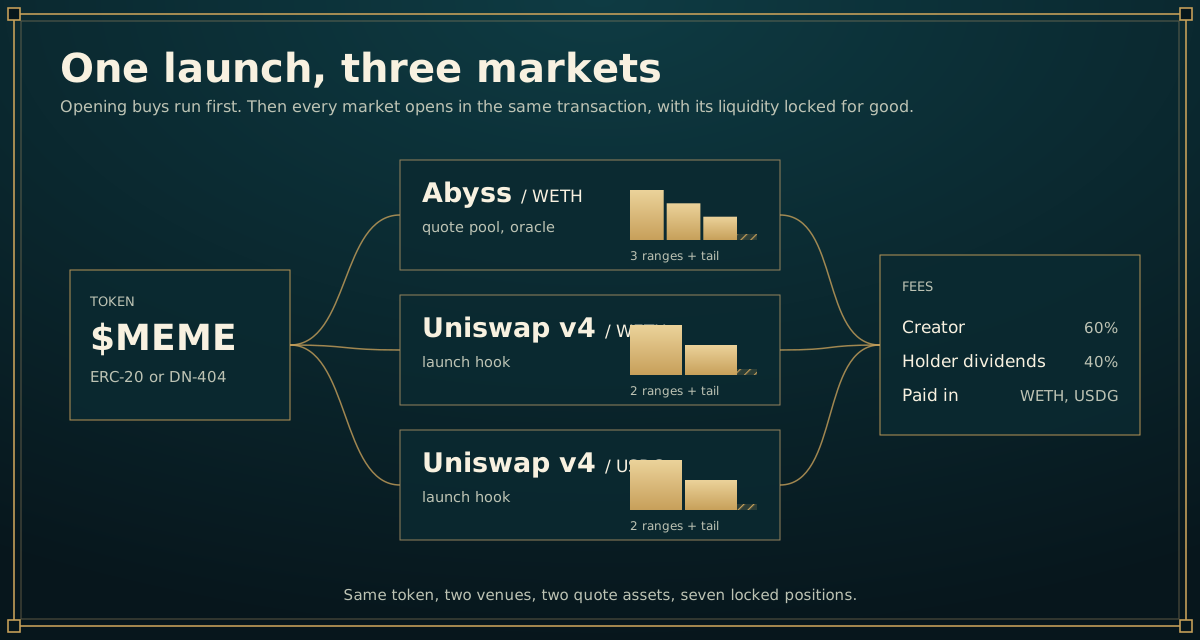
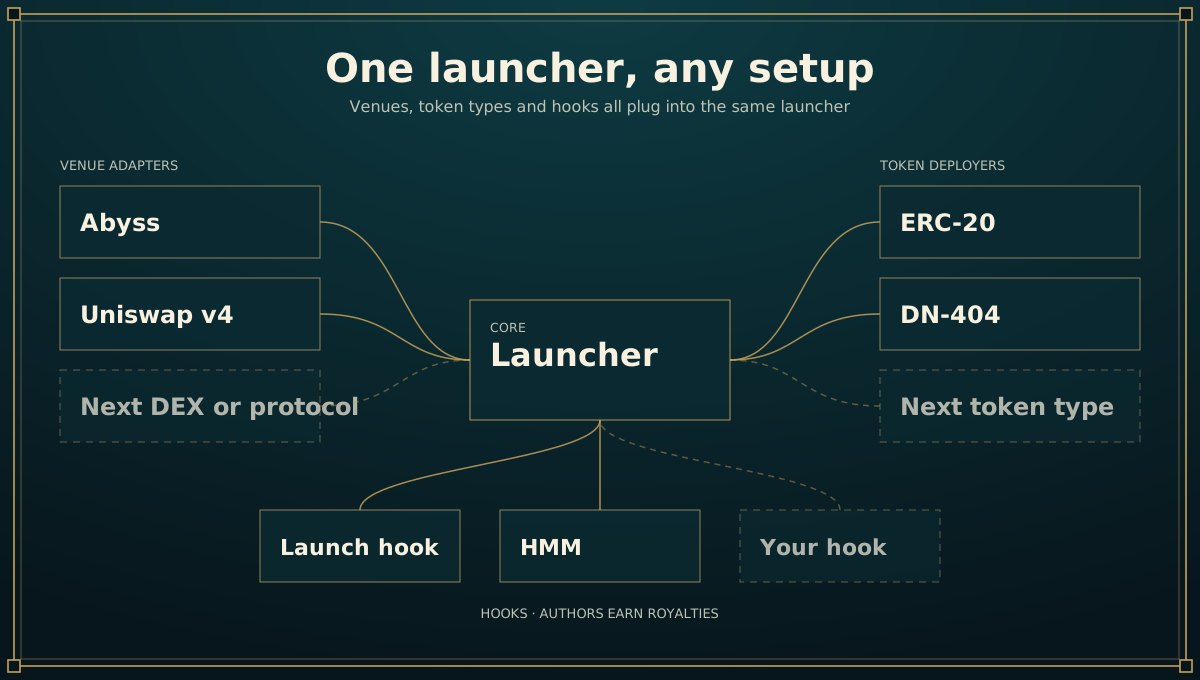
It's built on adapters, so every venue, token type and hook is a plug-in. Abyss and Uniswap v4 are the first two. Adding another DEX, another protocol or something that isn't a token launch at all doesn't mean rebuilding anything. Token launches are just the first thing we've built on it, and we have ideas.
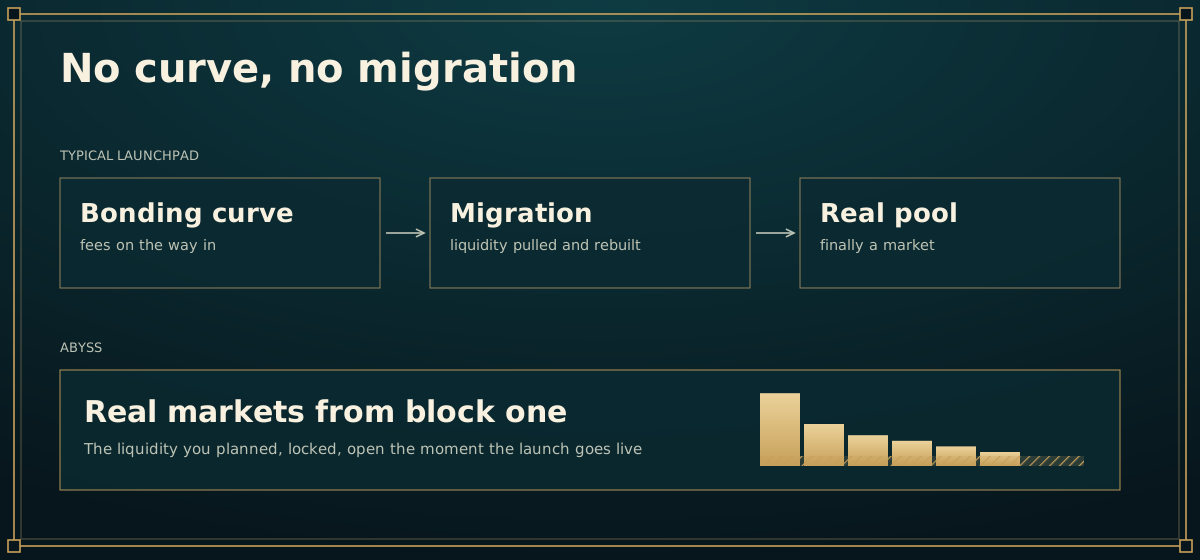
There's no bonding curve either. Curves usually end up as a predatory fee market or a way to stockpile liquidity before a migration. On Abyss you set up the liquidity you actually want from day one, so there's nothing to migrate.
Fees go wherever the creator says: to themselves, to holders, to stakers or into a burn. The token can be a standard ERC-20 or a DN-404, where holding enough of the token means holding an NFT. DN-404 got forgotten. We brought it back because why not.
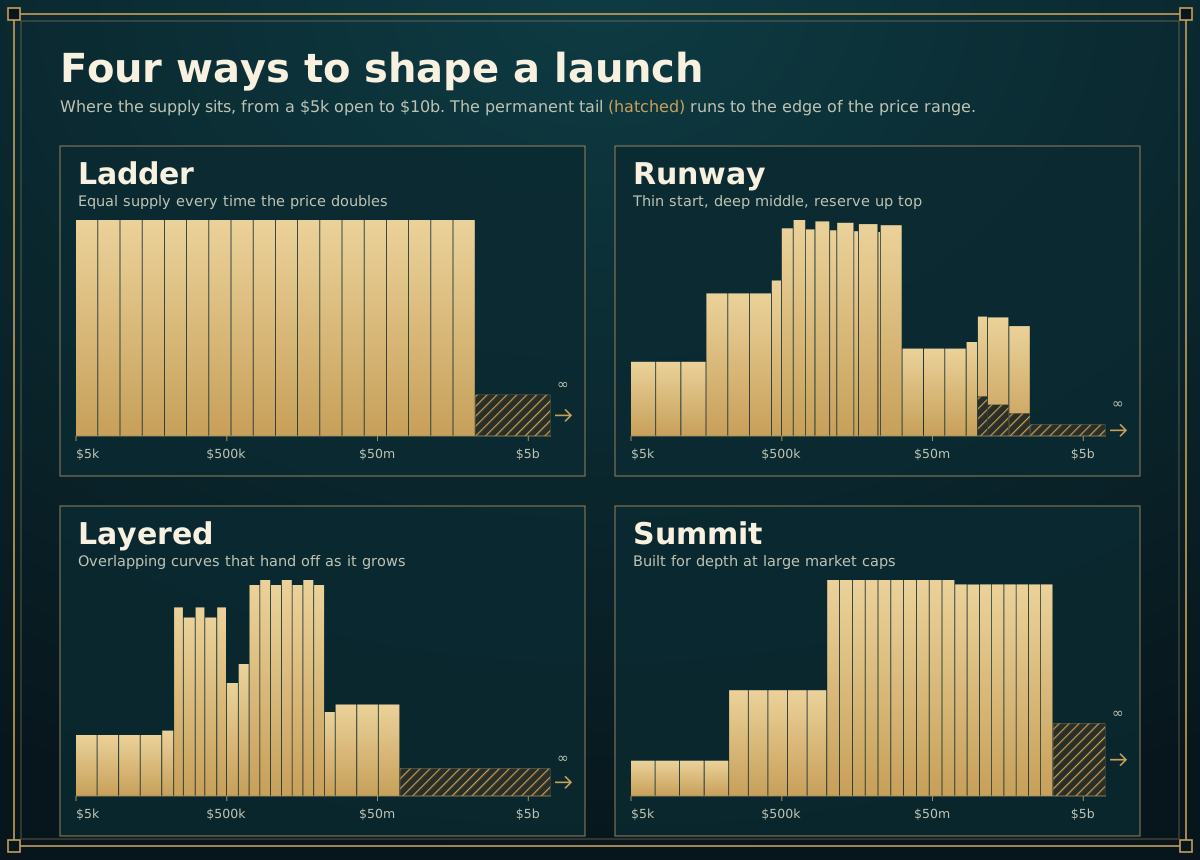
And because you pick the ranges, you get to design how the market behaves as it grows: how much supply goes cheap early, and how deep the market is if the token actually gets big. Here are a few shapes we've designed.
Hooks
A hook is a small program that lives inside a Uniswap v4 pool and gets a say in every trade and every change to its liquidity. Give a pool that and it can do almost anything. Charge more when price is running and less when it's quiet. Buy its own token on the way down. Quietly stack a treasury, feed another protocol, or rename the token every time someone buys it, just because.
We started with the essentials. Our launch hook is what gives v4 pools single-asset fees and the truncated oracle. Then it got more interesting. One hook reads that oracle and sets fees off the price. HMM, which ships with the launcher, turns the pool into its own market maker: it uses launch fees to buy dips and sells back above what it paid, with nobody pressing a button.
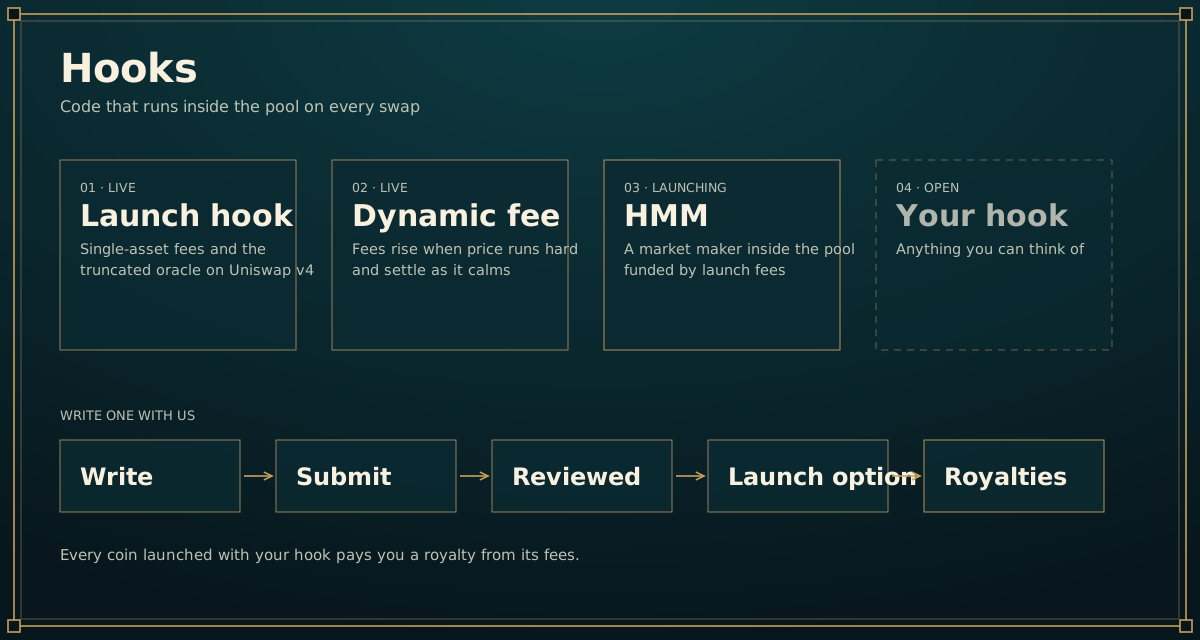
We'll keep building them, some useful, some just because they're fun. The bigger idea is that we aren't the only ones who get to. Write a hook, send it in, and once it's reviewed it becomes something any creator can launch with. When they do, you get paid from the fees.
Lending
Lending is next, and it's still curated. We decide what gets listed and how much can be borrowed. What's different is that we don't have to wait for anyone else's price feed anymore, because coins launched with our oracle already have one onchain. So once your coin builds up real liquidity, we can list it for you with small, safe lending caps and open them up step by step as the market grows. That's leverage on your coin, on a timeline set by your market instead of by whether someone decided to cover it.
Or hand it to an agent
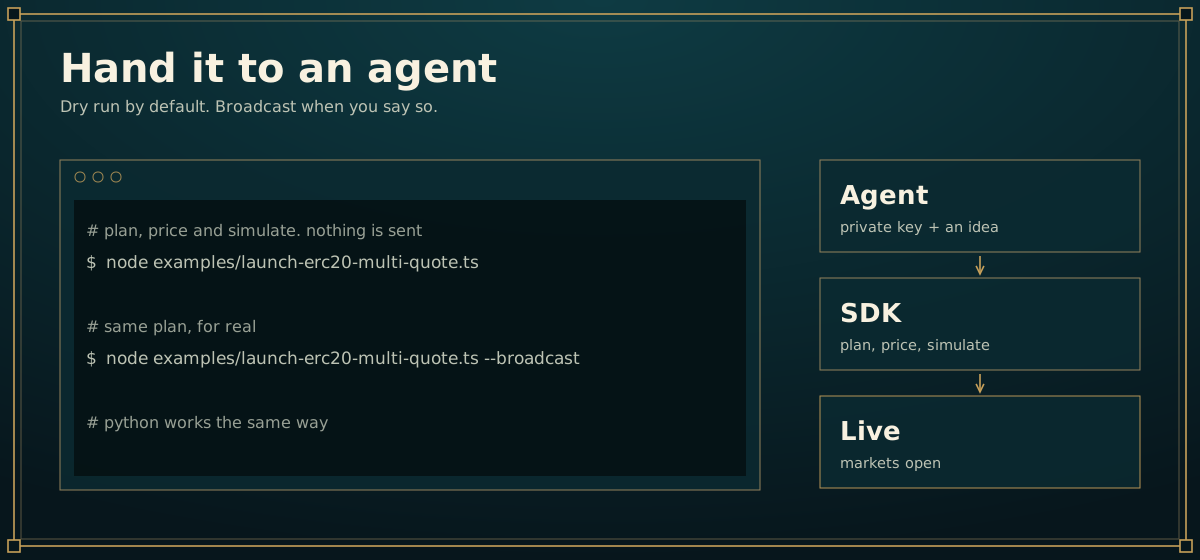
Everything works without the website too. Give an agent a private key and our SDK, and it can launch whatever you can describe. We did a lot of that while building. One of them opened at a $2.4 million valuation instead of $5,000, which taught the SDK some manners about pricing.
Built to plug into
Abyss was built on the old DeFi idea of building blocks. Pools are permissionless, the launcher runs on adapters, and even the bookkeeping is open: anyone can collect a launch's fees and earn a small bounty for it, so keepers and other protocols run that plumbing instead of us.
It also means we're happy to plug your protocol in. If a token integration makes sense with some part of your infrastructure, whatever it is, we want to build it with you.
The first one is with United Founders Group (@UFGDeFi). UFG builds Sovereign Treasuries: contracts with no owner that hold real assets behind a token and give holders the power to redeem at any time. With every redemption, token supply is burned while the permanent floor increases, meaning backing will never go to zero.
Together we're bringing UFG’s novel treasury technology to coins launched on Abyss, so a coin's own trading fees and revenue streams can build real backing behind it.

Looking into the abyss
There's a lot more down here.
Hooks opened the pool up to anyone. Next we want to do the same for the token itself. That starts with stranger token types, like one that changes its own name on the fly, and leads to creators submitting their own token designs for review, the same way hooks work, so anyone can launch them.
Further out, a launch doesn't have to be a single token. We're looking at one-click systems where you spin up your own Tomb or Olympus-style economy, with the token, the treasury and the mechanics all deployed together.
We also want Abyss on more chains, potentially starting with Ethereum mainnet, bringing the DEX and the launcher with it. And deep in research, launches that span chains, with a token going live on several networks at once through cross-chain messaging.
From the depths...
App: app.abyss.trading
Docs: docs.abyss.trading
Blog: blog.abyss.trading
Hooks: github.com/abysshopper/abyss-hooks
Node SDK: github.com/abysshopper/black-market-node-sdk
Python SDK: github.com/abysshopper/black-market-python-sdk